Half Dome
Polly climbs the 1,500-metre north face of Half Dome on rising thermals with a flock of white-throated swifts, reaches the summit at dawn, and takes the long glide back down.

Before you read
Before you read
On the fourth day, Polly decided to climb Half Dome. Not the famous cable route up the back, which was still closed for the season anyway, but the air route. Half Dome's flat north face rose almost vertically from the valley floor, 1,500 metres of bare granite, polished smooth by a glacier that had retreated 15,000 years ago. Climbers free-soloed it. Polly intended to glide it.

She started at first light. The air in the valley was thick and cool. Updrafts off the warming rock at the base of the dome would lift her for the first part of the climb. She knew this because she had watched the swifts the day before. White-throated swifts had been screaming around the dome face for hours, riding the same air.

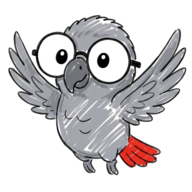
She flew out from a stand of ponderosa pines near Mirror Lake. She climbed slowly, in tight spirals. The face of the dome rose. The dome's curve became less curve and more sheer wall. She watched her glasses smudge in the morning damp. She tilted them straight against her beak with one foot, mid-flight.

At about three hundred metres up, she joined the swifts. There were dozens of them. They moved in fast loose flocks, white throats flashing, screeching to each other. Polly was the slowest bird in the air by a wide margin. The swifts did not seem to mind. One of them passed within a wing-tip of her at full speed and clicked.

The wind picked up at five hundred metres. The granite face gave off heat already, even though the sun was barely on it. Heat lifted air. Lifted air lifted Polly. She climbed in long slow arcs, conserving her wing muscles, letting the rock do the work.

Halfway up, she rested on a small ledge where a few stunted firs were growing in a crack. From there she could see the cable route. The metal cables that climbers held onto on the back side of the dome lay along the bare rock like a long thin spine. They were closed off for spring. By July, hundreds of people a day would haul themselves up that wire.

At the top, the granite was flat. Just flat. A hundred metres across, slightly tilted, with a few small piles of stones where humans had marked their summits. The wind up here was steady. Polly walked to the edge of the diving board, the famous overhanging slab, and looked.

The valley was a small ribbon below. The Merced River was a green-grey thread. El Capitan, across the way, was so close she felt she could fly to it. The trees were not trees. They were a fuzz of green on the canyon floor.

She stood at the edge for a long time. Then she did the smallest, calmest peregrine-style dive she could manage, just over the lip, and pulled up almost immediately to glide along the curve of the dome on the way down.

At the bottom, on the trail, a young woman was bent over taking a photograph of a swift. She did not see Polly land on the rail of a bench behind her. The woman's camera clicked. The bench was warm. Polly closed her eyes. The whole valley smelled of pine and warm rock.
That's the story.
You just heard Polly
Want to hear what YOU sound like?
Read a line of the story out loud. Your recording stays on your device and is never uploaded.
Not bad, right? In the PollyStop app, Polly listens to exactly that and scores you right away.
Coaching, saved words, spaced repetition, and a fresh story every day.
Get PollyStop freeYour AI tutor
Now say it out loud. Talk about this story with Polly.
Polly is PollyStop's voice tutor. She talks with you about stories like this one, out loud.
Get PollyStop free.
- A new graded story every day, with audio.
- Save the words you meet and practise them later.
- Speaking practice with feedback.
- Polly, the voice tutor, is opening up to more learners.
Keep going at C1
Next stories
Read this story in another language.
Same story, different language. Compare the shape and rhythm without losing the plot.
Keep learning in PollyStop
Listen, save words, practise