
Water at the Bottom
Vor dem Lesen
Vor dem Lesen
3 Fragen am Ende. Erst lesen oder hören, dann sehen, wie viel du verstanden hast.
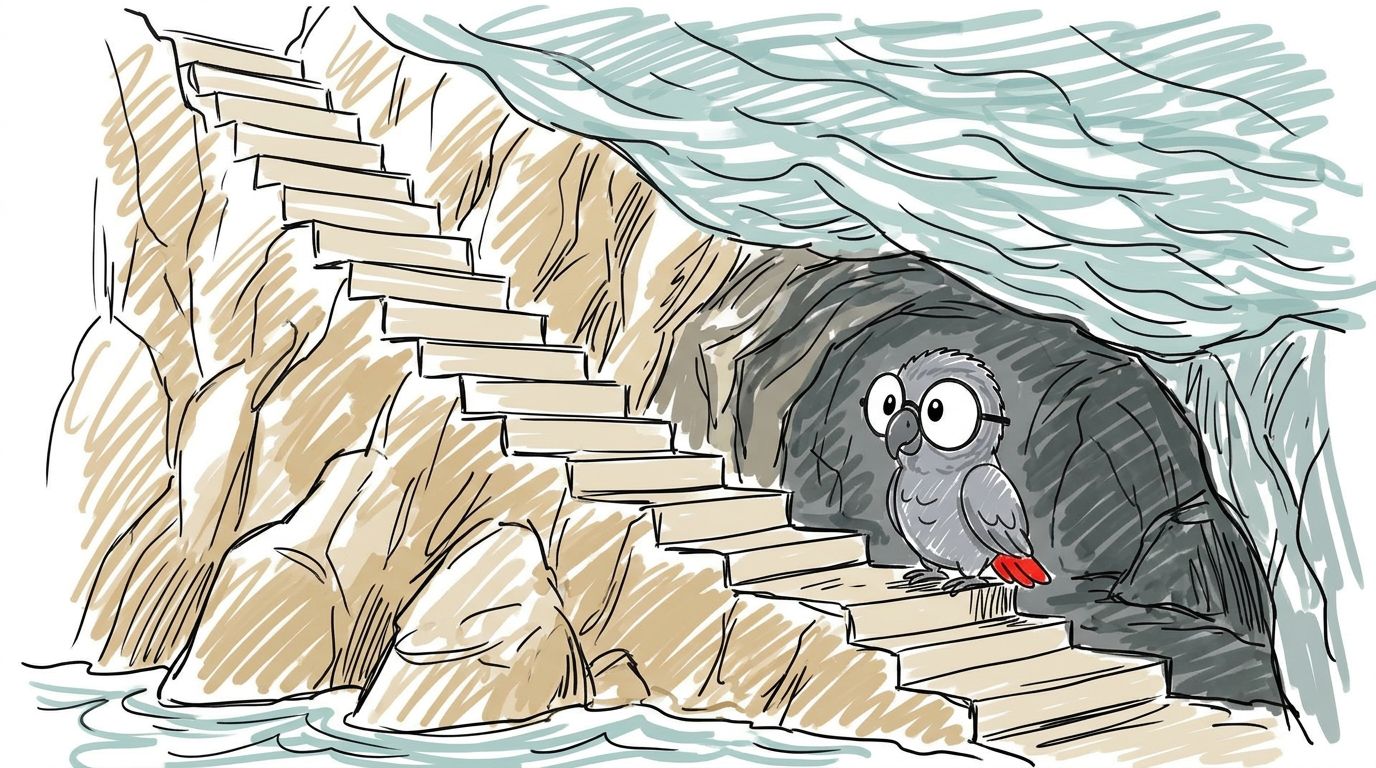
Quiz ↓The last part of the steps is different. The rock is wet now. It is dark and cold. At the bottom there is a small cave.
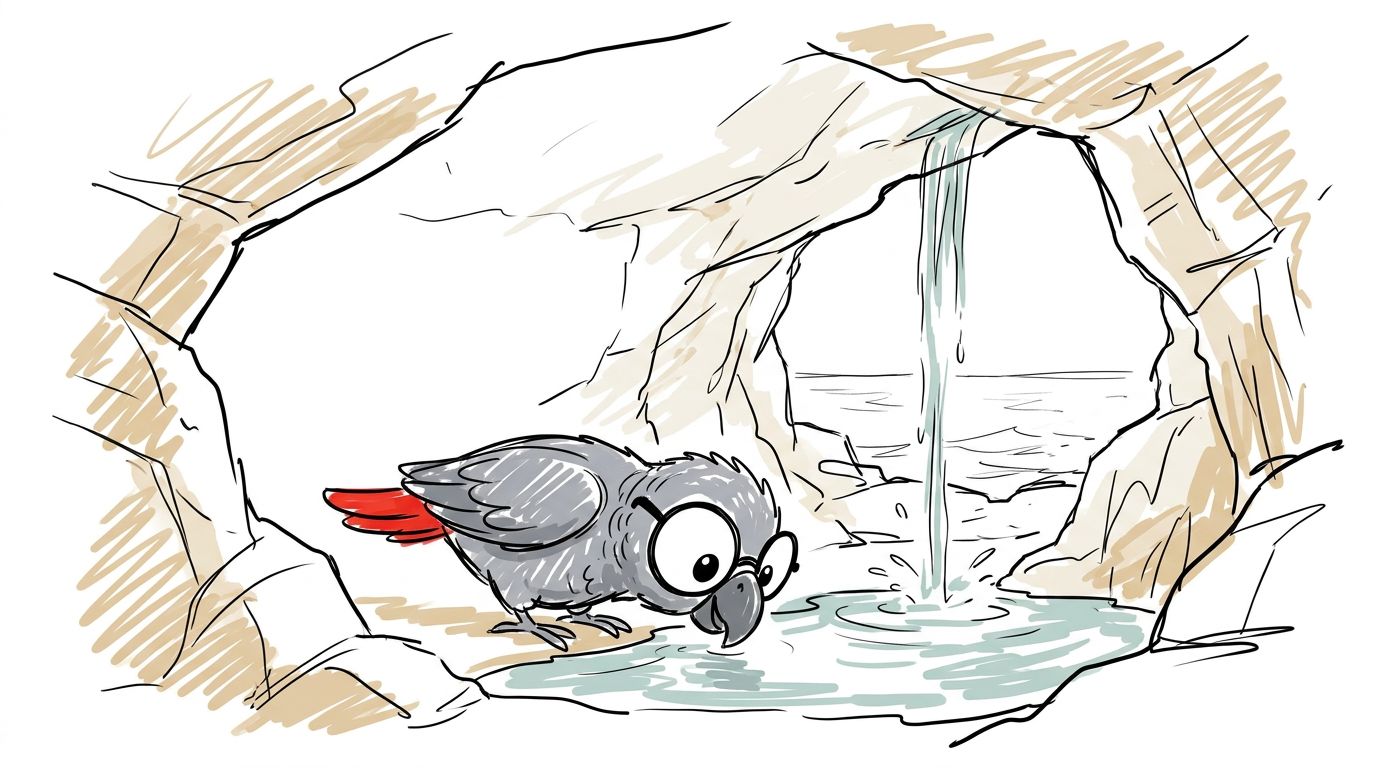
Inside the cave, fresh water comes out of the rock. Polly tastes it. It is cold and sweet. The sea is right there, but this water is not salty.
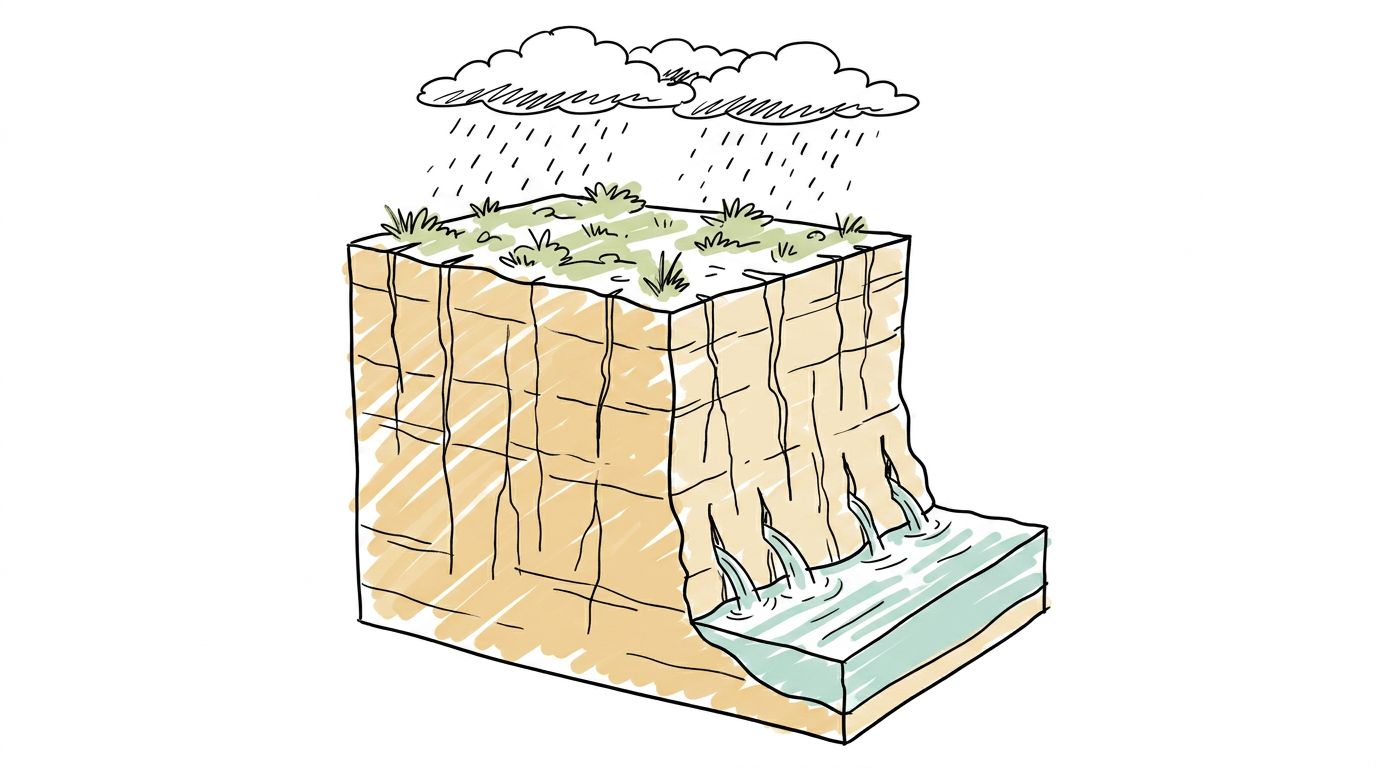
Rain falls on the land above. The rock up there is limestone. The water sinks into it. It travels down inside the stone and comes out here.
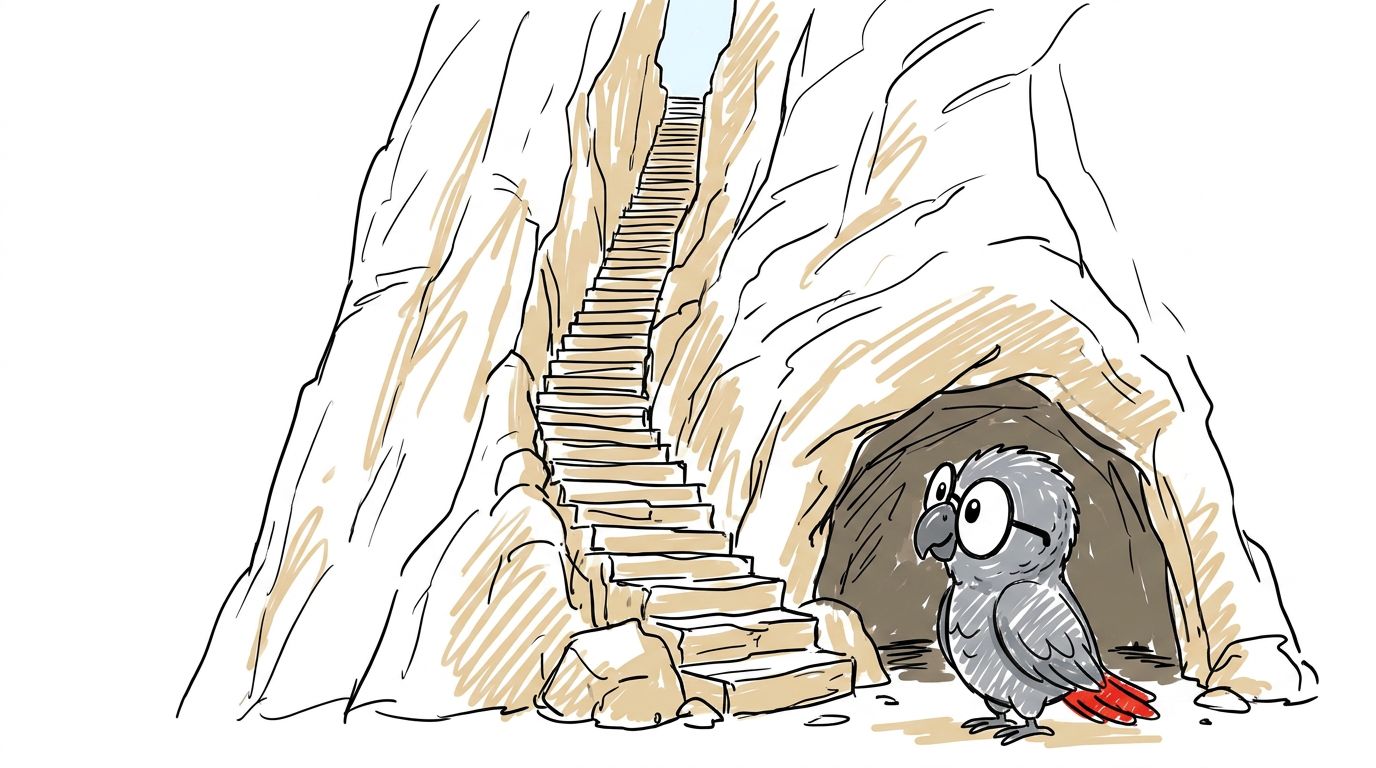
Now Polly understands the steps. Soldiers did not make them in one night. Monks made them, slowly, for many years. They wanted this water.
Das war die Geschichte. Hast du alles verstanden? ↓
Du hast gerade Polly gehört
Willst du hören, wie DU klingst?
Lies eine Zeile der Geschichte laut vor. Deine Aufnahme bleibt auf deinem Gerät und wird nie hochgeladen.
Nicht schlecht, oder? In der PollyStop-App hört Polly genau das und bewertet dich sofort.
Coaching, gespeicherte Wörter, Wiederholung in Abständen und jeden Tag eine neue Geschichte.
PollyStop kostenlos holenDid you understand the text?
Hast du es verstanden?
Die Fragen sind auf Englisch.
What type of water comes out of the rock in the cave?
Who made the steps over many years?
What is the rock at the top made of?

Dein KI-Tutor
Sag es jetzt laut. Sprich mit Polly über diese Geschichte.
Polly ist die Sprach-Tutorin von PollyStop. Sie spricht mit dir laut über Geschichten wie diese.
PollyStop kostenlos holen.
- Jeden Tag eine neue gestufte Geschichte mit Audio.
- Speichere neue Wörter und übe sie später.
- Sprechtraining mit Feedback.
- Polly, die Sprach-Tutorin, öffnet sich für mehr Lernende.
Weiter auf diesem Niveau: A2
Nächste Geschichten
Lies diese Geschichte in einer anderen Sprache.
Dieselbe Geschichte, eine andere Sprache. Vergleiche Aufbau und Rhythmus, ohne den Faden zu verlieren.
Fragen am Ende: 3
Erst lesen, dann prüfen, was du verstanden hast