The Milky Way Over Glacier Point
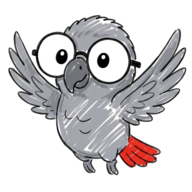
Polly watches sunset from Glacier Point and stays for the Milky Way, looking through a park astronomer's telescope at the centre of our galaxy, 26,000 light years away.

Before you read
Before you read
Yosemite had the darkest sky most American visitors ever saw. Polly had heard that from Tomas. She decided to find out.

She waited out the late afternoon at Glacier Point, the cliff-edge overlook 970 metres above the valley floor. A small crowd had gathered for the sunset. They had brought blankets and Thermoses and folding chairs. Polly perched on the railing at the back of the overlook, where the crowd thinned. Most of the people had cameras. Most of them were facing west.

The sun went down behind the Sierra ridge. The valley filled with shadow. Half Dome, across the way, caught the last red light on its high curved face and held it. Twenty seconds. Then the red was gone too. The crowd applauded gently, as if the mountain had done something polite.

A park astronomer in a brown vest had set up a small telescope at the edge of the overlook. He gave a short talk while the sky grew darker. About light pollution. About how most American cities had lost the Milky Way to streetlights. About how, in Yosemite, on a clear moonless night, you could still see what humans had seen at this latitude for the entire history of being human.

Polly listened. She also watched the sky.

The first stars came out one at a time. Vega. Arcturus. Then the constellations filled in. By full dark, the Milky Way was a band of pale light running from horizon to horizon, broken by dark dust clouds where stars were just being born.

The astronomer said the dust clouds were actually called dark nebulae. They were patches of interstellar dust thick enough to block the light from the stars behind them. The famous one that ran along the spine of the Milky Way was the Great Rift. Polly could see it now, clearly, a dark river running through a pale field.

A visitor lined up to look through the telescope. The astronomer pointed it at a small smudge near the constellation Sagittarius. "This," he said, "is the centre of our galaxy. The supermassive black hole at its heart is twenty-six thousand light years away." Polly hopped along the railing to where she could see the telescope eyepiece. The astronomer noticed her. He waited until the visitor stepped back, then he tilted the telescope slightly so she could see in.

Through the eyepiece, a small dense cluster of stars and dust. The astronomer did not explain it further. He did not need to. Polly looked for a long time. Twenty-six thousand years ago, the light leaving that cluster started its trip toward this telescope. Polly was alive to receive it. The astronomer was. The visitor was. It struck her as the kind of thing you should be quiet about.

When she looked up from the eyepiece, the Milky Way was still there. A pale road through the sky. She thought about all the millions of years it had been there before there was anyone to see it, and all the millions of years it would still be there after.

The astronomer was already packing up the telescope. He nodded to her. She tilted her head back. He smiled, and went on packing.
That's the story.
You just heard Polly
Want to hear what YOU sound like?
Read a line of the story out loud. Your recording stays on your device and is never uploaded.
Not bad, right? In the PollyStop app, Polly listens to exactly that and scores you right away.
Coaching, saved words, spaced repetition, and a fresh story every day.
Get PollyStop freeYour AI tutor
Now say it out loud. Talk about this story with Polly.
Polly is PollyStop's voice tutor. She talks with you about stories like this one, out loud.
Get PollyStop free.
- A new graded story every day, with audio.
- Save the words you meet and practise them later.
- Speaking practice with feedback.
- Polly, the voice tutor, is opening up to more learners.
Keep going at C1
Next stories
Read this story in another language.
Same story, different language. Compare the shape and rhythm without losing the plot.
Keep learning in PollyStop
Listen, save words, practise