Opening the Dome
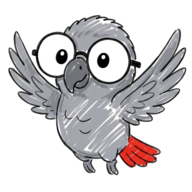
Polly watches the dome of UT1, one of the four 8.2-metre telescopes of the Very Large Telescope at Paranal, open for the night, with astronomer Camila Vargas at the console.

Before you read
Before you read
Sunset at Paranal had the colour of a peach with the skin still on. The sky went red, then violet, then a deep cobalt that nothing else looks quite like. There was no haze. The horizon was a hard sharp line.

At half past six, the dome of UT1 began to open.

Polly was perched on the catwalk above. The catwalk circled the dome at the level where the slit opened. She had been told to stay out of the way, and to not make any sound that might startle the operator. She intended to do both.

The slit was twenty metres tall and six metres wide. It opened slowly, with a soft mechanical whir. Through the gap, the inside of the dome was almost completely dark. As the slit widened, Polly could see, by the rising twilight, the shape of the telescope below. The shape was not what most people would call a telescope. It looked more like a vast hospital instrument the size of a house. Polished metal struts. Black exposed cables. A cluster of cameras and instruments hanging from a central beam. The main mirror, eight point two metres across, was a curved disc at the bottom, polished to a tolerance of fifty nanometres across its entire surface. The mirror was made of a glass-ceramic called Zerodur. It expanded almost zero when heated or cooled. It had been ground to its current shape in Germany over five years and brought here on a ship and a slow truck.

At the back of the dome, behind a glass wall, an astronomer was at a console with eight monitors in a half-circle around her. Her name, Polly had learned at dinner, was Camila Vargas. She was thirty-four, from Concepción in southern Chile, and she had been a senior support astronomer at Paranal for four years. She wore a dark fleece against the night cold of the dome, which would soon match the outside temperature within tenths of a degree to avoid air-thermal turbulence.

Camila was running calibration. Polly could see the small dot of green on her main screen as she pointed the telescope at a calibration star.

"First, we focus," Camila said, half to Polly and half to herself. "The telescope's mirror gets warped a little every day by gravity and temperature. We adjust the mirror surface in real time using 150 actuators that push on the back of the glass. We can change its shape by less than the width of a sound wave. We do this every few minutes during the night."

Polly tilted her glasses straight against the cold wind.

The dome shifted with a hum, rotating to point at a different patch of sky. The whole structure, twenty-five thousand tons of steel and concrete, turned on bearings smoother than a pool table. Polly felt the catwalk tilt.

The first stars were coming out. Then the Milky Way, very faintly. Then more clearly. Then with a force Polly had not been ready for.

The Atacama sky was not like the sky at Glacier Point. It was more. The dust lanes were clearer. The galactic core was a real visible structure with depth. There were stars she could see that she had never seen before. There were entire fields of stars where, anywhere else, there would have been a black space between two known stars.

Camila looked up from her screen. "OK," she said. "We are open. We have our first target."
That's the story.
You just heard Polly
Want to hear what YOU sound like?
Read a line of the story out loud. Your recording stays on your device and is never uploaded.
Not bad, right? In the PollyStop app, Polly listens to exactly that and scores you right away.
Coaching, saved words, spaced repetition, and a fresh story every day.
Get PollyStop freeYour AI tutor
Now say it out loud. Talk about this story with Polly.
Polly is PollyStop's voice tutor. She talks with you about stories like this one, out loud.
Get PollyStop free.
- A new graded story every day, with audio.
- Save the words you meet and practise them later.
- Speaking practice with feedback.
- Polly, the voice tutor, is opening up to more learners.
Keep going at C1
Next stories
Keep learning in PollyStop
Listen, save words, practise